

Industry




Deburring VS Grinding
In metal manufacturing, surface finishing processes are essential for improving product quality and performance. Two commonly used processes are deburring and grinding. Although these processes are sometimes confused, they serve different purposes in metal processing.
Understanding the differences between deburring and grinding helps manufacturers choose the right process to achieve higher precision, better surface quality, and improved production efficiency.

What Is Metal Polishing
Metal polishing is an important surface finishing process widely used in the manufacturing industry. It improves the appearance, smoothness, and performance of metal products.
In industries such as sanitary ware, automotive parts, hardware fittings, and valves, metal polishing plays a crucial role in producing high-quality components.
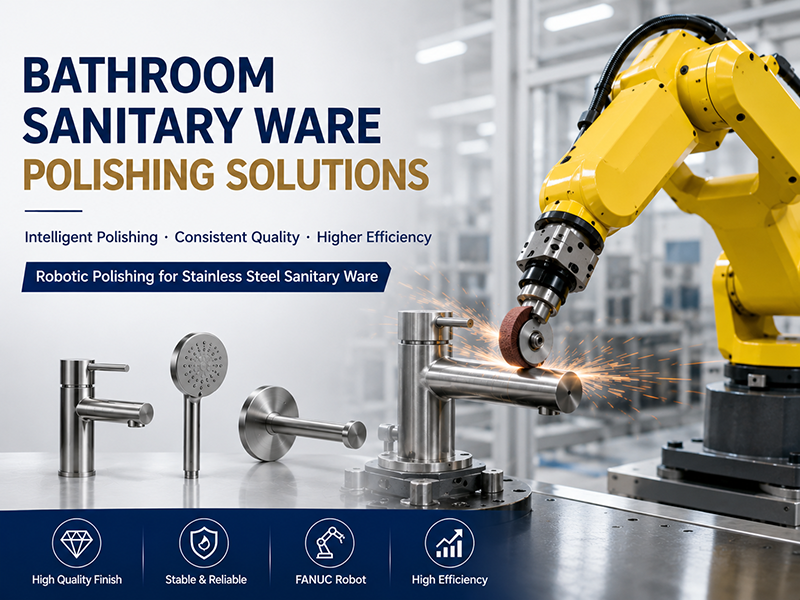
With the development of automation technology, modern factories increasingly adopt automated polishing machines and robotic polishing systems to improve efficiency and consistency.

Why the Casting Industry Must Automate
The global manufacturing industry is rapidly moving toward automation and intelligent production. In the casting industry, automation has become a key factor for improving efficiency, product quality, and workplace safety.
Traditional foundries often rely heavily on manual operations, which can lead to inconsistent product quality and high labor costs.
As market competition increases, foundries must adopt automated equipment and intelligent production systems to remain competitive.

How to Recycle Casting Sand
In the foundry industry, large amounts of sand are used in the casting process, especially in sand casting and core making. After multiple production cycles, the used sand becomes waste foundry sand, which must be treated or recycled.
If waste sand is not properly recycled, it can cause environmental pollution and increase production costs for foundries.
Therefore, many modern foundries are investing in sand recycling systems to improve sustainability and efficiency.

How to Solve Shrinkage Problems in Casting
Shrinkage defects are one of the most common quality problems in the metal casting industry. They often appear as cavities or porous areas inside castings, which can significantly reduce the mechanical strength and reliability of the final product.
Shrinkage defects may occur during the solidification process when molten metal contracts and insufficient metal is supplied to compensate for the volume reduction.
Understanding the causes of shrinkage and applying the correct casting techniques can effectively reduce or eliminate these defects.